In home decor, color goes beyond mere aesthetics—it reflects culture, trends, and global economic shifts.
Today, emerging decor color trends are being shaped by a dynamic mix of global trade, cultural influences, and sustainable innovations. From India’s rich natural dyes to the bold hues of African marketplaces, color trends are now bubbling up from grassroots sources rather than being dictated by traditional authorities. This shift highlights how global trade and conscious consumerism are redefining the future of home decor palettes.
Table of Contents
- Color, Trends and Pantone’s Color of The Year
- The Silk Road of Pigments: Supply Chain Innovations
- The Digital Dye Pot: E-commerce and Direct-to-Consumer Impact
- Conscious Hues: Ethical Sourcing and Consumer Values
- So, What Does This Mean for Those of Us in the Home Décor and Furniture Market?
- Deep Dive Podcast
- Related Content
Color, Trends and Pantone’s Color of The Year
As someone who has been in this industry for years, one thing I’ve noticed is how much trends have changed over time. There just aren’t clear, defined trends like there used to be. I think this is because the world has become so much more connected—thanks to the internet, it’s truly a flatter place than it’s ever been. Whether we like it or not, we live in a digitally connected world, and that connectivity impacts everything, including home decor trends.
Therefore, in the world of home decor, color is more than just an aesthetic choice—it is a reflection of culture, trends, and even global economic shifts. For years, Pantone has been considered the gold standard for color forecasting, with its annual Color of the Year announcement shaping everything from fashion and design to home interiors.

I’m still a big fan of Pantone and the incredible work they do with their annual color focus. Like many others, I always look forward to seeing their new color trends each year. That said, it’s important to remember that Pantone isn’t the only company influencing trends in the industry.
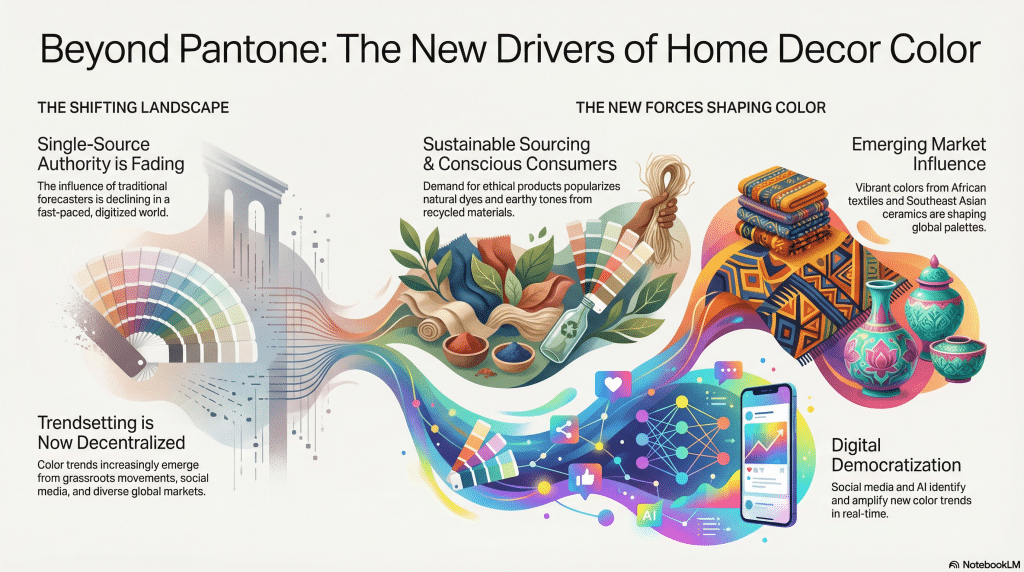
But as the world becomes increasingly interconnected through trade, technology, and shifting consumer values, the influence of Pantone as the sole authority on color trends is fading.
Today, emerging decor color trends are being shaped by a fascinating interplay of global trade dynamics, cultural influences, and innovations in sustainable sourcing. From the vibrant dyes of India to the bold hues inspired by African marketplaces, the story of color is no longer dictated solely by traditional color authorities but is instead bubbling up from unexpected, grassroots sources.
This deep dive will explore how global trade and shifting consumer demands are driving the next wave of home decor color trends.
The Fading Authority: Why Pantone Isn’t the Whole Story
For decades, Pantone has been the go-to source for color inspiration. Its Color of the Year announcement is a much-anticipated event, often setting the tone for design industries worldwide.
In today’s rapidly globalized and digitized world, Pantone’s approach to color forecasting is facing new challenges as the way trends emerge continues to evolve. While Pantone remains a respected authority in the design industry, the rise of social media, real-time data, and global connectivity has introduced new ways for trends to develop and spread, often at a much faster pace.
Traditional forecasting models, like those used by Pantone, have long relied on analyzing past trends and cultural movements to project future directions in color. While this method has been highly effective for decades, the dynamic nature of today’s global marketplace—driven by instant communication, diverse cultural influences, and rapid shifts in consumer behavior—means that trendsetting is no longer confined to a single source.
Instead, color trends are increasingly shaped by a mix of grassroots creativity, regional influences, and digital innovation, creating a more decentralized and diverse picture of what’s next in design.
Color Trends In An Fast-paced World
As the world moves faster and information spreads more quickly than ever, color trends are evolving and shifting at an unprecedented pace.
Real color trends are no longer confined to the boardrooms of design firms or the pages of trend reports. Instead, they are emerging from grassroots movements, social media platforms, and the evolving preferences of consumers in diverse markets around the world.
The globalization of trade and the democratization of design have created a world where color trends are influenced by a broader range of factors than ever before. From the rise of direct-to-consumer brands to the increasing importance of ethical sourcing, the forces shaping color trends are as diverse as the palettes themselves.
The Silk Road of Pigments: Supply Chain Innovations
One of the most significant drivers of emerging color trends is the evolution of global supply chains. In particular, advancements in sustainable dye production are introducing novel color palettes that reflect the unique characteristics of their regions of origin.
For example, in India, the resurgence of traditional dyeing techniques using natural, plant-based materials is producing rich, earthy tones that are being embraced by global consumers.
Similarly, in Africa, local artisans are experimenting with vibrant, organic pigments derived from plants, minerals, and even insects. These colors carry a sense of authenticity and cultural heritage that resonates with consumers seeking unique and meaningful decor options.
Shortened supply chains and localized manufacturing are also playing a crucial role in shaping color trends. As brands move towards more sustainable and ethical production practices, they are increasingly sourcing materials and dyes locally. This shift not only reduces the environmental impact of transportation but also allows for the creation of regionally inspired color palettes that reflect local landscapes, traditions, and cultures.
The demand for natural and eco-friendly pigments is driving new color discoveries as well. For instance, indigo, a dye that has been used for centuries in various cultures, is experiencing a resurgence in popularity due to its deep, rich hue and sustainable production process.
Similarly, ochres, clays, and other natural earth tones are being celebrated for their connection to the environment and their ability to create warm, inviting spaces.

From Addis Ababa to Your Apartment: Emerging Market Influence
As global trade continues to expand, emerging markets are becoming powerful drivers of color trends in home decor.
Countries in Southeast Asia, such as Vietnam and Sub-Saharan Africa, in particular, are experiencing rapid economic growth and an increase in consumer purchasing power. This has led to a surge in demand for home decor products that reflect local tastes and cultural identities.
In Ethiopia, for example, the vibrant colors of traditional textiles are inspiring new palettes that are being adopted by designers worldwide. The bold reds, yellows, and greens found in Ethiopian patterns are making their way into modern interiors, adding a touch of global flair to contemporary spaces.
Similarly, the rich blues and golds of Southeast Asian ceramics are influencing color trends in everything from kitchenware to decorative accessories.
The ripple effect of these emerging markets extends beyond their borders. As consumers in these regions gain more influence in the global economy, their preferences are being reflected in the products available worldwide. This trend is not only diversifying the color palettes available to consumers but also fostering a greater appreciation for cultural diversity in design.

The Digital Dye Pot: E-commerce and Direct-to-Consumer Impact
The rise of e-commerce and direct-to-consumer brands has fundamentally changed the way color trends are created and disseminated. Unlike traditional retailers, which often rely on established color authorities like Pantone, these brands have the agility to respond to emerging trends almost in real-time.
Social media platforms like Instagram, Pinterest, and TikTok have become powerful tools for identifying and spreading new color trends. Viral aesthetics, such as “cottagecore” or “dark academia,” often feature distinctive color palettes that quickly gain traction among consumers. These trends, driven by user-generated content and amplified by algorithms, have a direct impact on home decor choices.
Artificial intelligence is also playing a growing role in color forecasting. By analyzing vast amounts of data from social media, e-commerce platforms, and other sources, AI can identify micro-trends and predict their potential to go mainstream.
This technology is democratizing the world of color forecasting, allowing smaller brands and independent designers to compete with established players like Pantone.
Conscious Hues: Ethical Sourcing and Consumer Values
In recent years, there has been a significant shift in consumer values towards sustainability and ethical sourcing. This shift is not only influencing the materials used in home decor but also the colors that consumers are drawn to.
Today’s consumers are increasingly interested in the origin stories of the products they buy. They want to know where materials come from, how they are made, and the impact their production has on the environment and local communities. This demand for transparency is driving the popularity of colors that are associated with sustainability and natural beauty.
For example, the use of recycled materials in home decor often results in unique, muted color palettes that celebrate imperfections and the beauty of the raw materials. Similarly, the use of plant-based dyes creates subtle, organic hues that reflect a commitment to environmental sustainability.
Looking ahead, it is likely that future color trends will continue to be shaped by global conscious consumerism. As more consumers prioritize ethical and sustainable products, we can expect to see a shift towards authentic, meaningful palettes that tell a story and reflect a commitment to making the world a better place.
So, What Does This Mean for Those of Us in the Home Décor and Furniture Market?
With trends evolving faster than ever, what does this mean for businesses in the home décor and furniture industry? I believe there are a few key takeaways to keep in mind:
Know Your Customers
At the end of the day, it’s not just about following trends—it’s about understanding what your customers want. If the trending color of the year doesn’t align with your customers’ preferences or what they’re willing to buy, then it won’t matter how popular it is.
What truly matters is offering products, designs, and colors that resonate with your audience and meet their needs.
Pay Attention to Trend Authorities
While trends aren’t everything, it’s still important to keep an eye on trusted sources like Pantone and major paint companies. These organizations invest significant time and resources into researching and forecasting trends.
Use their insights as a guide, but also conduct your own research to determine what aligns with your brand and what will work best for your customers.
Focus on What Works for Your Brand
Ultimately, don’t stress too much about chasing every trend. What’s most important is offering a cohesive look, design, and color palette that speaks to your customers and aligns with your brand identity. When you stay true to what your audience loves and values, you’ll create products that sell—regardless of what the latest trend reports say.
By balancing an understanding of your customers’ preferences with insights from trend authorities, you can navigate the fast-changing world of home décor and color trends while staying true to your brand.
The world of home decor color trends is undergoing a profound transformation. While Pantone and other traditional color authorities will likely continue to play a role, the real drivers of emerging trends are increasingly coming from unexpected sources. From innovations in sustainable dye production to the influence of emerging markets and the rise of e-commerce, global trade dynamics are reshaping the way we think about color.
As consumers, we have the power to shape these trends through our choices. By prioritizing ethically sourced, sustainable products and embracing the diversity of global cultures, we can create living spaces that are not only beautiful but also meaningful and reflective of the interconnected world we live in. Beyond Pantone, the future of color is vibrant, diverse, and deeply rooted in the global community.
Deep Dive Podcast
Check out our Deep Dive Podcast.
Find out more about how Mondoro can help you create, develop, and manufacture excellent home decor and furniture products – don’t hesitate to contact me, Anita. Check out my email by clicking here or become a part of our community and join our newsletter by clicking here.
Mondoro gives out a FREE Lookbook to anyone interested. You can receive a copy of our latest Lookbook by clicking here.
Listen to our Podcast called Global Trade Gal and Deep Dive Podcast. You can find it on all major podcast platforms. Try out listening to one of our podcasts by clicking here.
Subscribe to our Mondoro Company Limited YouTube Channel with great videos and information by clicking here.
Related Content
Pantone’s Color of the Year: Cloud Dancer – A Breath of Fresh Air for 2026
In true Pantone fashion, they surprised us all with a choice that goes beyond expectations: Cloud Dancer. This serene, versatile shade has captured my heart, and I believe it perfectly encapsulates the emotions, aspirations, and mindset of 2026.
Read our blog Pantone’s Color of the Year: Cloud Dancer – A Breath of Fresh Air for 2026 by clicking here.
Using Shapr3D and Google Gemini: A Powerful Design Duo
Read on as we will explore how I use Shapr3D, a cutting-edge CAD program, alongside Google Gemini, an AI-powered visualization tool, to enhance my design process. These tools are not just software—they’re design companions that help me bring my creative visions to life in ways that were previously unimaginable.
Read our blog Using Shapr3D and Google Gemini: A Powerful Design Duo by clicking here.
Why AI is the New Design Companion
Design is a deeply personal and creative process, driven by human imagination and ingenuity. At its core, design is about expressing ideas, solving problems, and creating something that resonates with others. But as the world evolves, so do the tools we use to bring our ideas to life. Enter artificial intelligence (AI), a technology that, when used correctly, can become one of the most valuable companions for designers, product developers, and creatives alike.
Read our blog Why AI is the New Design Companion by clicking here.