

Navigating the world of home décor and furniture manufacturing can feel like learning a foreign language. Whether you’re a first-time buyer, an interior design enthusiast, or someone just starting out in the supply chain, the industry terminology can be overwhelming. From technical production terms to shipping acronyms and material specifications, there’s a vast lexicon that professionals use daily but rarely explain to newcomers.
This comprehensive glossary aims to demystify the language of home décor and furniture manufacturing. Understanding these terms isn’t just about sounding knowledgeable—it’s about making informed decisions, communicating effectively with suppliers, and avoiding costly mistakes. For those looking to purchase home décor and furniture items, especially when dealing with manufacturers and suppliers directly, this guide will serve as your essential translator.
The supply chain for home furnishings is complex and global, with materials and products often crossing multiple borders before reaching your home. Each step of this journey comes with its own specialized vocabulary. By mastering these terms, you’ll navigate the purchasing process with greater confidence and clarity.
Let’s decode the language of furniture and home décor, one term at a time.

Materials and Construction
Here are some of the most common terms you need to understand about various materials and construction methods in furniture manufacturing:
MDF (Medium-Density Fiberboard)
An engineered wood product made by breaking down hardwood or softwood residuals into wood fibers, combining them with wax and resin, and forming panels under high temperature and pressure. MDF is known for its smooth surface, consistent density, and lack of grain pattern, making it ideal for painted furniture and intricate designs.
Particleboard
Similar to MDF but made with larger wood particles rather than fibers. It’s generally less expensive than MDF but also less dense and durable. Often used as a core material in lower-cost furniture, particularly for flat-pack items.
Plywood
Manufactured from thin layers of wood veneer (plies) that are glued together with adjacent layers having their wood grain rotated relative to adjacent layers. This cross-graining improves strength and reduces the tendency to split when nailed at the edges.
Veneer
A thin slice of wood applied to the surface of a core material (usually MDF, particleboard, or lower-grade solid wood). Veneers allow furniture to have the appearance of expensive woods while keeping costs manageable.
Solid Wood
Furniture made entirely from natural wood planks rather than engineered wood products. Solid wood furniture is typically more expensive but often more durable and repairable than veneer or engineered wood alternatives.
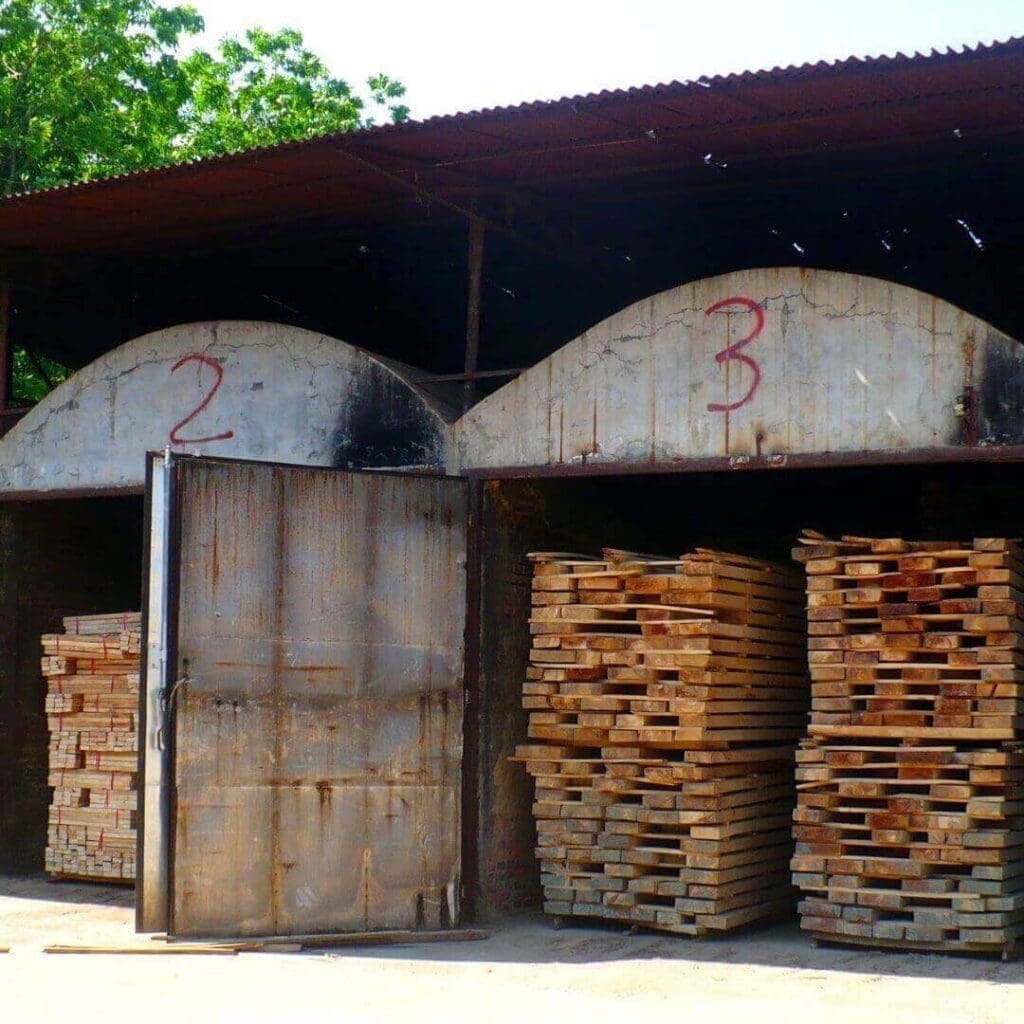
Kiln-Drying
A process where lumber is placed in a large oven (kiln) to remove moisture under controlled conditions. This prevents warping, cracking, and other issues that can occur as wood naturally dries. Properly kiln-dried wood is essential for quality furniture that will maintain its structural integrity over time.
Joinery
The various methods used to connect pieces of wood together. Common joinery techniques include:
- Dovetail Joints: Interlocking wedge-shaped cuts that provide exceptional strength, often used in drawers
- Mortise and Tenon: A projection (tenon) on one piece fits into a cavity (mortise) in another
- Dowel Joints: Wooden pegs inserted into corresponding holes in adjoining pieces
- Butt Joints: Simple edge-to-edge connections, usually reinforced with screws or nails
Hardwood vs. Softwood
Despite their names, these terms refer to the botanical classification of trees rather than the actual hardness of the wood. Hardwoods come from deciduous trees (oak, maple, walnut) while softwoods come from coniferous trees (pine, cedar, fir). Generally, hardwoods are denser and more durable, making them preferred for high-quality furniture.

Finishes and Treatments
The finishing process transforms raw furniture into polished pieces, protecting surfaces while enhancing aesthetic appeal through various coatings and techniques. Understanding finish terminology helps buyers assess durability, maintenance requirements, and how different treatments affect both the appearance and longevity of home furnishings.
Finish
The protective and decorative coating applied to furniture surfaces. Finishes protect wood from moisture, wear, and damage while enhancing its appearance.
Lacquer
A durable, high-gloss finish that dries quickly and creates a hard, protective surface. Modern lacquers are typically water-based or catalyzed for improved durability and environmental friendliness.
Varnish
A transparent, hard protective finish primarily used on wood. Traditional varnish is a combination of resin, drying oil, and solvent.
Shellac
A resin secreted by the female lac bug, dissolved in alcohol to create a quick-drying, non-toxic finish. Shellac provides a warm, amber tone to wood but offers less water resistance than other finishes.
Polyurethane
A synthetic finish available in water-based and oil-based formulations, known for its exceptional durability and resistance to scratches, heat, and solvents.
Stain
A colored solution applied to wood to change its color while still allowing the grain pattern to show through. Unlike paint, stain penetrates the wood rather than sitting on top.
Distressing
Intentionally damaging furniture surfaces to create an aged, antique appearance. Techniques include wire brushing, worm holing, and artificial wear marks.
Patina
The natural aging process of materials, particularly metals and woods, resulting in changes to color and texture. Some manufacturers artificially create patinas to give new furniture a vintage appearance.

Upholstery Terms
In the home decor and home furniture space, upholstery has its own set of specific terms that are essential to understand:
Batting
Sheets of cotton, polyester, or blended fibers used as padding in upholstered furniture, placed between the frame and outer fabric.
Welt/Piping
A fabric-covered cord sewn into seams of upholstered pieces to define edges and provide a finished look.
Eight-Way Hand-Tied Springs
A premium suspension system where craftsmen manually tie each spring to adjacent springs in eight different directions, creating exceptional comfort and durability.
Sinuous Springs
S-shaped wire springs that run from front to back in a seat. Less expensive than eight-way hand-tied but still provides good support.
Webbing
Strips of material (jute, nylon, or elastic) woven together to create a support system for cushions or springs.
Tufting
A upholstery technique where fabric is pulled into the padding and secured, creating a pattern of depressions often highlighted with buttons.
Fabric Grades
Numerical or alphabetical classifications of upholstery fabrics based on quality, durability, and price. Higher grades typically indicate more expensive, higher-quality fabrics.
Double-Rub Count
A measure of fabric durability, indicating how many back-and-forth rubs a fabric can withstand before showing wear. Residential fabrics typically have 10,000-25,000 double rubs, while commercial-grade fabrics have 30,000+ double rubs.

Manufacturing and Production Terms
When sourcing furniture and home décor, you’ll encounter specialized manufacturing terminology that’s crucial to understand for successful procurement. These production terms help navigate everything from order quantities to delivery timelines.
CNC (Computer Numerical Control)
Automated control of machining tools using computer programming. CNC machines can create intricate designs and ensure consistent quality across production runs.
MOQ (Minimum Order Quantity)
The smallest number of units a manufacturer will produce in a single order. MOQs help manufacturers maintain efficiency and profitability by avoiding small, costly production runs.
Lead Time
The period between placing an order and receiving the finished product. Lead times in furniture manufacturing can range from weeks to months depending on complexity, customization, and production location.
Production Capacity
The maximum output a manufacturer can produce within a specific timeframe. Understanding a supplier’s production capacity is crucial when planning large orders or meeting seasonal demands.
Quality Control (QC)
The system of maintaining standards in manufactured products by testing samples against specifications. Effective QC processes are essential for ensuring consistency across production runs.
Prototype
A preliminary model of a furniture piece used to evaluate design, functionality, and manufacturing feasibility before full production begins.
Sampling
The process of creating representative examples of products for approval before mass production. Samples allow buyers to verify quality, appearance, and specifications.
Customization
Modifications to standard products to meet specific requirements. Common customizations include fabric choices, finish options, dimensions, and hardware selections.

Business and Supply Chain Terms
Navigating the global furniture supply chain requires familiarity with key business terminology that impacts pricing, responsibility, and logistics. Understanding these terms helps buyers negotiate better deals and avoid unexpected costs when purchasing home décor and furniture items.
FOB (Free On Board)
A shipping term indicating the point at which the seller transfers responsibility for goods to the buyer. “FOB Origin” means the buyer assumes responsibility once the goods leave the seller’s facility, while “FOB Destination” means the seller maintains responsibility until the goods reach the buyer.
EXW (Ex Works)
An international trade term where the seller makes goods available at their premises, and the buyer is responsible for all transportation costs and risks.
CIF (Cost, Insurance, and Freight)
A shipping term where the seller covers costs, insurance, and freight to bring goods to the port of destination. The buyer assumes responsibility once the goods arrive at the port.
B2B (Business-to-Business)
Transactions between businesses, such as between manufacturers and retailers, rather than between businesses and consumers.
Wholesale
The sale of goods in large quantities, typically to retailers or other businesses rather than to end consumers. Wholesale prices are lower than retail prices.
Markup
The difference between the cost of a product and its selling price, typically expressed as a percentage of the cost. Retail markups on furniture often range from 40% to 80%.
Landed Cost
The total cost of a product, including the original price, shipping, customs, duties, taxes, insurance, and handling fees. Understanding landed cost is crucial for accurate pricing and profitability analysis.
Trade Show
Industry events where manufacturers, suppliers, and designers showcase their latest products to potential buyers. Major furniture trade shows include High Point Market (North Carolina), Salone del Mobile (Milan), and Maison & Objet (Paris).

Sustainability and Compliance
Today’s furniture industry faces increasing demands for environmental responsibility and regulatory compliance, with specific certifications and standards that ensure product safety and sustainability. Understanding these terms helps buyers identify products that meet both regulatory requirements and personal values regarding environmental impact and health concerns.
FSC (Forest Stewardship Council) Certified
A designation indicating that wood products come from responsibly managed forests that provide environmental, social, and economic benefits.
CARB Compliance
Adherence to California Air Resources Board standards limiting formaldehyde emissions from composite wood products. CARB Phase 2 is the current standard, with stricter limits than Phase 1.
VOCs (Volatile Organic Compounds)
Chemicals that evaporate at room temperature and can affect indoor air quality. Low-VOC or VOC-free finishes are increasingly important in furniture manufacturing.
Cradle-to-Cradle Design
A sustainable design approach where products are created with their entire lifecycle in mind, ensuring materials can be reused or safely returned to the environment.
LEED (Leadership in Energy and Environmental Design)
A green building certification program that includes criteria for sustainable furniture and interior products.
BIFMA (Business and Institutional Furniture Manufacturers Association)
An organization that develops safety and performance standards for furniture. BIFMA certification indicates that furniture meets specific quality and durability requirements.
Prop 65
A California law requiring businesses to provide warnings about significant exposures to chemicals that cause cancer, birth defects, or reproductive harm. Many furniture items require Prop 65 warnings due to certain finishes or components.

Shipping and Logistics
Getting furniture from factory to customer involves complex logistics processes with varying service levels and cost implications. Understanding shipping terminology helps retailers and consumers set appropriate expectations about delivery methods, timing, and additional services that may be required to successfully receive home furnishings.
Blanket Wrap
A shipping method where furniture is wrapped in padded blankets rather than boxed, typically used for local or regional deliveries of high-end pieces.
White Glove Delivery
Premium delivery service that includes bringing furniture into the home, assembly, placement in the desired location, and removal of packaging materials.
Curbside Delivery
Basic delivery service where items are brought to the curb or driveway but not into the home. The customer is responsible for bringing items inside and assembly.
Freight Class
A classification system used in shipping that determines transportation rates based on a product’s density, stowability, handling requirements, and liability.
Pallet
A flat transport structure that supports goods during shipping. Furniture is often secured to pallets for protection and ease of handling with forklifts.
Consolidation
The practice of combining multiple smaller shipments into one larger shipment to reduce transportation costs.
Last Mile Delivery
The final step in the delivery process, bringing products from a transportation hub to the final destination (typically the customer’s home).

Design and Style Terms
The language of furniture design encompasses distinctive aesthetic movements and principles that define the look and feel of home décor pieces. Familiarity with these style terms helps buyers communicate preferences clearly and select pieces that create cohesive, intentional interior spaces.
Mid-Century Modern
A design movement from roughly 1945 to 1975 characterized by clean lines, gentle organic curves, and a mix of different materials. Think Eames chairs and tapered furniture legs.
Scandinavian Design
Minimalist design approach emphasizing clean lines, functionality, and light colors, originating from Nordic countries. Characterized by simplicity, natural materials, and craftsmanship.
Industrial Style
Design aesthetic featuring raw materials, exposed architectural elements, and utilitarian objects. Often incorporates metal, distressed wood, and mechanical components.
Transitional
A design style that bridges traditional and contemporary, combining elements of both for a balanced, timeless look. Features clean lines with rounded profiles and a neutral color palette.
Biophilic Design
Incorporating natural elements and connections to the outdoors into interior spaces. Includes natural materials, plants, natural light, and nature-inspired patterns and forms.
Ergonomics
The study of people’s efficiency in their working environment, applied to furniture design to create pieces that support the human body comfortably and reduce physical stress.
Scale and Proportion
Design principles relating to the size of objects in relation to each other and the space they occupy. Proper scale ensures furniture fits appropriately within a room.
The language of home décor and furniture manufacturing can seem daunting at first, but understanding these terms is essential for anyone looking to make informed purchasing decisions. Whether you’re communicating with manufacturers, evaluating product specifications, or simply trying to understand what makes quality furniture different from lower-end alternatives, this glossary provides the foundation you need.
For those just starting out in the supply chain or looking to purchase home décor and furniture items, this knowledge empowers you to ask the right questions, understand product descriptions, and negotiate effectively with suppliers. The furniture industry, like many others, relies heavily on specialized terminology that can create barriers for newcomers. By breaking down these barriers, we hope to make the world of furniture and home décor more accessible to everyone.
Remember that quality furniture is an investment, and understanding the materials, construction methods, and business terms involved helps ensure that investment pays off with pieces that bring beauty and functionality to your space for years to come. As you continue your journey in the world of home furnishings, keep this glossary handy—it’s your translator for the language of furniture design and manufacturing.
Whether you’re sourcing products for a retail business, furnishing your first home, or simply curious about how your favorite pieces are made, the terminology in this guide will help you navigate the industry with confidence and clarity.
Find out more about how Mondoro can help you create, develop, and manufacture excellent home decor and furniture products – don’t hesitate to contact me, Anita. Check out my email by clicking here or become a part of our community and join our newsletter by clicking here.
Mondoro gives out a FREE Lookbook to anyone interested. You can receive a copy of our latest Lookbook by clicking here.
Listen to our Podcast called Global Trade Gal and Deep Dive by Global Trade Gal. You can find it on all major podcast platforms. Try out listening to one of our podcasts by clicking here.
Subscribe to our Mondoro Company Limited YouTube Channel with great videos and information by clicking here.
Related Content
Why Gold Leaf Never Goes Out of Style: The Timeless Appeal of Gold Leaf
Among the many ways gold has been used throughout history, gold leaf stands out as one of the most enduring and versatile mediums. From ancient temples and religious icons to modern home décor and luxury furniture, gold leaf has transcended time and trends to remain a beloved element in art,
Read our blog Why Gold Leaf Never Goes Out of Style: The Timeless Appeal of Gold Leaf by clicking here.
The Timeless Influence of Botanical Art on Home Furnishings and Décor Design
Botanical art, which began as a scientific endeavor to document plant life, has evolved into a timeless design element that continues to shape the way we style our homes. While its influence is often associated with wallpaper, botanical art extends far beyond, influencing furniture, textiles, rugs, lighting, and other home décor elements.
Read our blog The Timeless Influence of Botanical Art on Home Furnishings and Décor Design by clicking here.
The Art of Measurement: How KPIs Bridge the Gap Between Master Craftsmanship and Successful Business
Whether you are developing software, constructing a skyscraper, or, as we will explore today, crafting a piece of ultra-luxury furniture, the difference between a chaotic failure and a profitable masterpiece usually comes down to visibility. How clearly can you see the progress of your project? How quickly do you know when something has gone wrong?
Read our blog The Art of Measurement: How KPIs Bridge the Gap Between Master Craftsmanship and Successful Business by clicking here.