

Source quality home décor and furniture from Asia offers unmatched advantages: extraordinary craftsmanship, competitive pricing, versatile production capabilities, and access to unique natural materials like rattan, bamboo, seagrass, and reclaimed wood.
Yet for many brands, retailers, and interior designers, the journey from initial sketch to receiving a pristine shipping container at the warehouse is fraught with risk. Product dimensions arrive slightly distorted, lacquer finishes bubble under humidity changes, carton packaging crushes during maritime transit, or lead times balloon without clear explanation.
How to Source High-Quality Home Décor Products from Asia (Without Costly Mistakes)
A single misstep—like approving mass production without a signed golden sample or misunderstanding your Incoterms—can wipe out your entire margin.
At Mondoro, we have spent decades boots-on-the-ground across manufacturing hubs in Asia, designing, developing, and manufacturing high-end home décor and furniture. Below is our complete, step-by-step roadmap to sourcing premium home décor in Asia efficiently, predictably, and without expensive mistakes.

1. Navigating the Asian Sourcing Landscape
The first mistake many buyers make is treating Asia as a single, homogenous manufacturing floor. Different countries, and distinct provinces within those countries, hold deep generational specializations.
Matching Material to Geography
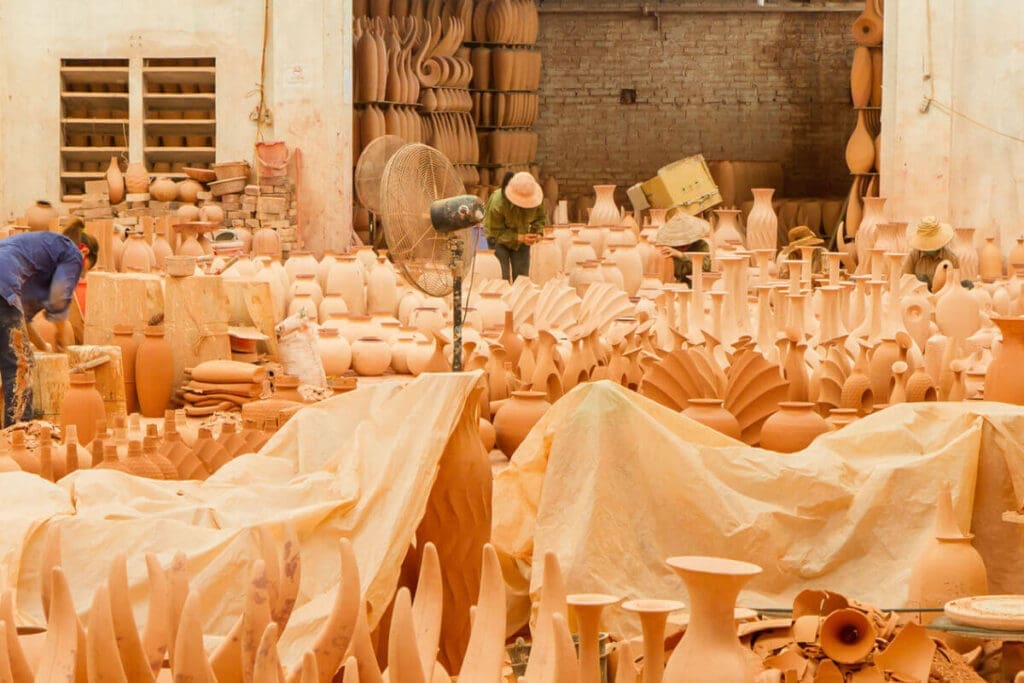
- Vietnam: Renowned globally for natural fibers (handwoven rattan, seagrass, water hyacinth), turned acacia and rubberwood furniture, ceramic pottery, and high-end outdoor weaving. Northern Vietnam (around Hanoi and the Red River Delta) is famous for artisanal craft villages, while Southern Vietnam (Binh Duong, Dong Nai) specializes in large-scale wooden furniture and industrial upholstery.
- China: Unrivaled supply chain integration, hardware, lighting fixtures, metalwork, precision upholstery, mirrors, and technical finishing. Key regions include Guangdong (furniture, lighting, and hardware) and Zhejiang/Jiangsu (textiles and small home accents).
- Indonesia: Exceptional solid wood craftsmanship (especially teak, mahogany, and suar wood), hand-carved accents, and bohemian natural fiber accents (Java and Bali).
- India: Masterful brass and iron metalwork, bone and mother-of-pearl inlay, hand-block printed textiles, and stonework (Rajasthan, Moradabad, and Uttar Pradesh).
- The Philippines: World-class high-end artisan design, sophisticated wicker manipulation, and intricate mixed-material fabrication (Cebu and Pampanga).
2. Supplier Discovery and Vetting: Factory vs. Trading Company
When searching for partners—whether through online directories or trade fairs—you will encounter two main entities: direct manufacturing factories and trading companies.
| Entity Type | Advantages | Challenges | Best Suited For |
| Direct Factory | Lowest unit price, direct control over production lines, transparent factory floor. | Higher Minimum Order Quantities (MOQs), limited product diversity outside their material niche. | Dedicated product lines requiring large runs in a single material family. May have issues if depends on factory quality assurance. |
| Trading Company / Agent | Low MOQs, broad multi-material sourcing, handles local logistics and communication. | Adds a margin, hidden factory identities, potential communication buffers during QC issues. | Smaller brands needing small batches across many distinct material categories. HIgher end companies requiring specific work and quality assurance. |
Red Flags to Watch for During Supplier Vetting
- Promising “we can make anything”: A true specialist factory excels in 1 to 2 core materials (e.g., woven rattan on aluminum frames, or case goods in oak veneer). Factories that claim expertise in marble, handblown glass, cast iron, and woven wicker simultaneously are outsourcing.
- Impossibly low quotes: Quotes coming in 30% below industry benchmarks signal material substitution down the line—such as unseasoned wood, low-density foam, or substandard plating that corrodes within months. This known as a catch and bait scheme.
3. Product Development and The Sampling Phase
The sampling phase is where your design meets real-world Asian production constraints. If a problem is not solved here, it will multiply a thousandfold during mass production.

The Tech Pack: Leave Nothing to Interpretation
Vague descriptions like “medium walnut finish with natural woven cane” invite disaster. Your specification sheet (Tech Pack) must detail:
- Precise Dimensions & Tolerances: Total height, seat depth, shade drop, frame thickness (with an allowable tolerance, e.g., $\pm 2\text{ mm}$).
- Material Specifications: Grade of rattan (e.g., Manau vs. Sega), timber type, moisture content requirements ($8\%–12\%$), and steel gauge.
- Finishing & Hardware: Exact Pantone or RAL color codes, lacquer sheen level (e.g., 20% matte vs. 80% gloss), socket type (UL/CE certified), and screw finishes.
- Component Concealment: For lighting, specify exact spider recess depths, socket concealment, and neck reveals so hardware remains tastefully hidden.
The Golden Sample Rule
Never greenlight bulk manufacturing until you hold a finalized Golden Sample (Production Approval Sample).
- Create two identical samples: one kept at the factory floor in a dust-proof container, and one held in your office.
- Both should be signed, dated, and photographed. Every future quality dispute will be judged against this physical benchmark.
4. Rigorous Quality Control (QC) Protocols
Relying on the factory’s internal QC team is a recipe for post-shipment heartbreak. Independent, staged quality inspections are your only real safeguard.
The Three Pillars of Inspection
- Pre-Production Inspection (PPI): Verify raw materials before work begins. Are the timber planks kiln-dried to the right moisture content? Has the woven rattan been treated against mold and insects?
- During Production Inspection (DUPRO): Conducted when 20% to 50% of the run is completed. Inspect framing joinery, structural weld strength, internal dowels, and initial lacquer applications. If mistakes exist, they can be corrected before finishing.
- Pre-Shipment Inspection (PSI): Conducted when 100% of goods are produced and at least 80% are packaged. Inspect final cosmetics, carton integrity, barcode labeling, drop testing, and carton shipping marks.
Applying AQL (Acceptable Quality Limit)
Standard international quality inspections use AQL standards (ISO 2859-1 / ANSI/ASQ Z1.4). For premium home décor, standard thresholds are:
- Critical Defects (0% allowed): Safety hazards, broken glass, sharp edges, uncertified electrical components.
- Major Defects (typically 2.5%): Noticeable structural or visual flaws that would cause a retail customer to return the item (e.g., wobbling chair legs, severe discoloration, warped table tops).
- Minor Defects (typically 4.0%): Small imperfections not readily apparent to the end consumer (e.g., minor underside finish blemishes, slight weave variance).
5. Avoiding Common Sourcing Pitfalls: Real-World Scenarios
Case Study 1: The Warped Tabletop (Moisture Equilibrium)
- The Scenario: A US brand imported 200 solid acacia dining tables from Southeast Asia. Upon arrival in a dry Midwestern winter, the tabletops cupped, bowed, and cracked along the seams within four weeks.
- The Root Cause: Southeast Asia’s ambient humidity sits above 75%–80%, while heated indoor US homes drop below 25% relative humidity. The wood was kiln-dried to only 16% moisture content instead of the destination-appropriate 8%–10%.
- The Solution: Mandate verified moisture meter readings on raw lumber prior to cutting and assembly. Require kiln logs and seal all underside wood surfaces with matching coats of barrier lacquer to equalize moisture transfer.
Case Study 2: The Crushed Lampshade Cartons (Packaging Failure)
- The Scenario: An e-commerce décor business ordered woven pendant lampshades. The samples were pristine, but 35% of the production order arrived deformed, crushed, or frayed.
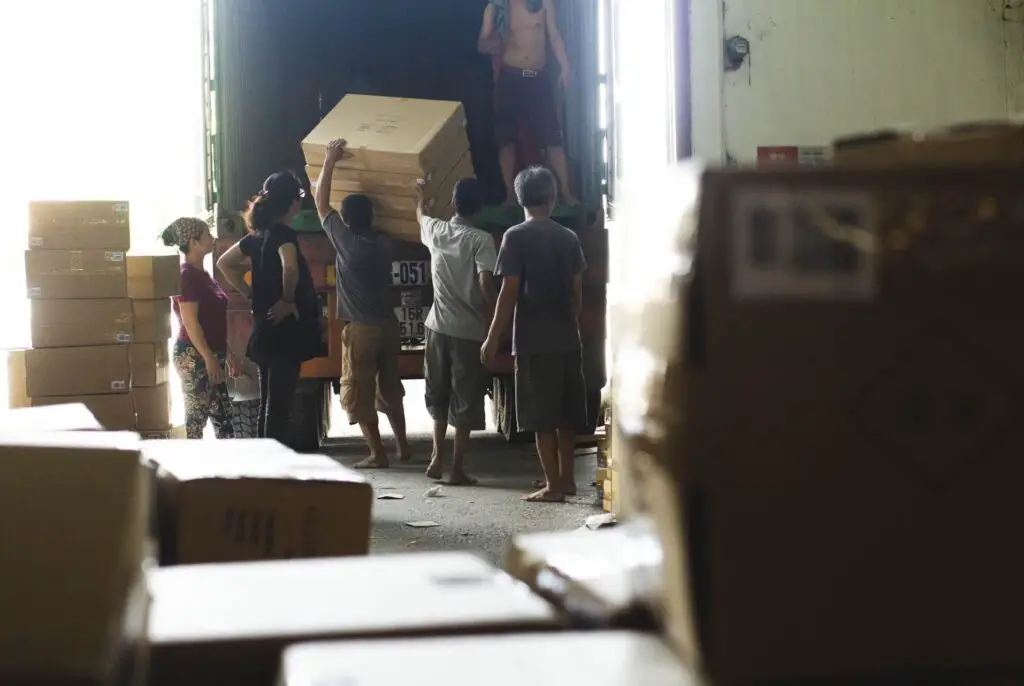
- The Root Cause: The factory packed the goods in single-wall (3-ply) corrugated cartons to shave packing costs. When stacked 6-high inside a 40ft High Cube container over three weeks on the ocean, the bottom cartons buckled under static load.
- The Solution: Require minimum 5-ply (double-wall) or 7-ply corrugated cartons with an Edge Crush Test (ECT) rating matching container stacking loads. Insist on international ISTA-1A or ISTA-3A carton drop tests before signing off on packaging.
6. Sourcing & Quality Verification Checklists
Keep these actionable checklists at hand for every production cycle.
Pre-Production Checklist
- [ ] Factory business license, export license, and third-party audit verified
- [ ] Detailed Tech Pack signed and stamped by factory management
- [ ] Timber moisture content parameters defined ($8\%–12\%$ depending on final market)
- [ ] Raw material treatment verified (anti-fungal, anti-pest fumigation)
- [ ] Golden Sample approved, signed, and mirrored in two locations
- [ ] Explicit payment milestones tied to inspection passes
Shipping & Packaging Checklist
- [ ] Carton drop test (ISTA-1A/3A) passed without internal product damage
- [ ] Double-wall (5-ply) corrugated export cartons utilized
- [ ] Silica gel desiccant packs or container dry bags included to prevent “container rain”
- [ ] Barcodes, SKU labels, and country-of-origin markings compliant with import laws
- [ ] Container loading inspection (CLI) confirmed: no wet flooring, no odors, proper weight distribution

7. Understanding Freight and Incoterms
Navigating global shipping terms (Incoterms) prevents unexpected bills from shipping lines and customs brokers.
- FOB (Free On Board): The gold standard for most medium-to-large home décor importers. The supplier pays for local trucking, export customs clearance, and loading the container onto the vessel at the Asian port (e.g., FOB Haiphong or FOB Shanghai). You maintain complete control over the ocean carrier rates, insurance, transit times, and destination handling.
- EXW (Ex Works): The supplier only makes the product available at their factory floor. You (the buyer) are responsible for domestic transit within Asia, export clearance, export customs documentation, and all ocean freight. Avoid EXW unless you operate an established on-the-ground consolidation team.
- DDP (Delivered Duty Paid): The vendor covers ocean freight, customs clearance, and delivery directly to your domestic warehouse. While hands-off, vendors heavily pad freight and customs margins to hedge against price volatility.
Partner with Mondoro: Your Sourcing & Manufacturing Team on the Ground
Sourcing luxury and commercial home décor from Asia shouldn’t feel like a high-stakes gamble. Successfully managing multi-material product lines requires deep engineering knowledge, relentless quality inspections, and trusted relationships across factory floors.
That is why leading retailers, hospitality developers, and interior brands rely on Mondoro.
Whether you are developing handwoven natural rattan accents, handcrafted lighting, solid wood furniture collections, or mixed-material home accessories, we bring your concepts to life—on schedule, within budget, and built to exacting export standards.
Want to create, develop, and manufacture amazing home décor products in Asia?
Contact Mondoro today. We would love to be your valued partner in Asia.
Find out more about how Mondoro can help you create, develop, and manufacture excellent home decor and furniture products – don’t hesitate to contact me, Anita. Check out my email by clicking here or become a part of our community and join our newsletter by clicking here.
Mondoro gives out a FREE Lookbook to anyone interested. You can receive a copy of our latest Lookbook by clicking here.
Listen to our Podcast called Global Trade Gal and Deep Dive by Global Trade Gal. You can find it on all major podcast platforms. Try out listening to one of our podcasts by clicking here.
Subscribe to our Mondoro Company Limited YouTube Channel with great videos and information by clicking here.
Related Content
Pantone’s Color of the Year: Cloud Dancer – A Breath of Fresh Air for 2026
In true Pantone fashion, they surprised us all with a choice that goes beyond expectations: Cloud Dancer. This serene, versatile shade has captured my heart, and I believe it perfectly encapsulates the emotions, aspirations, and mindset of 2026.
Read our blog Pantone’s Color of the Year: Cloud Dancer – A Breath of Fresh Air for 2026 by clicking here.
Using Shapr3D and Google Gemini: A Powerful Design Duo
Read on as we will explore how I use Shapr3D, a cutting-edge CAD program, alongside Google Gemini, an AI-powered visualization tool, to enhance my design process. These tools are not just software—they’re design companions that help me bring my creative visions to life in ways that were previously unimaginable.
Read our blog Using Shapr3D and Google Gemini: A Powerful Design Duo by clicking here.
Why AI is the New Design Companion
Design is a deeply personal and creative process, driven by human imagination and ingenuity. At its core, design is about expressing ideas, solving problems, and creating something that resonates with others. But as the world evolves, so do the tools we use to bring our ideas to life. Enter artificial intelligence (AI), a technology that, when used correctly, can become one of the most valuable companions for designers, product developers, and creatives alike.
Read our blog Why AI is the New Design Companion by clicking here